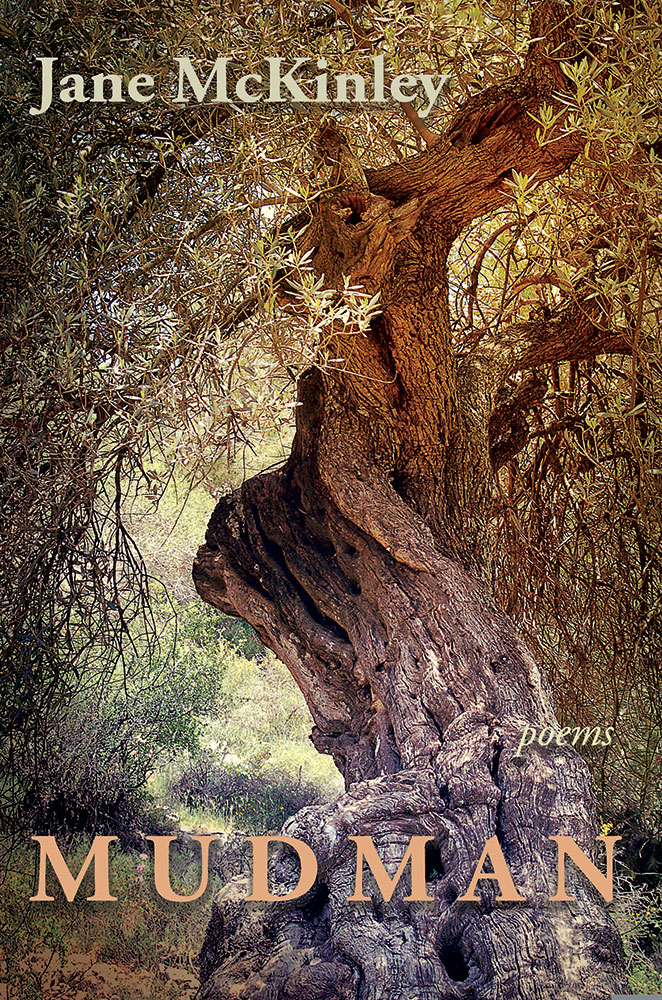
Jane McKinley’s beautiful collection of poems is striking for her observations of natural things which are so close, so true, as to reveal, paradoxically, what it is to be human. At times the things she sees lead her to great music and art, as when she finds in a bird’s feather “the unearthly blue / Fra Angelico used / for angels who witness / the Virgin ascending.” The high point of this collection, though, is when she writes vividly of her father, who fought in World War II. Here she shows us the price of war and the absurdity of it. These poems are intense, authentic, and hard-won.
— Grace Schulman, author of Again, the Dawn: New and Selected Poems
I’m always delighted to learn a new word from poetry, and in “marcescent”—as when leaves wither yet cling to the bough—Jane McKinley has found a figure for elegy: “No time to prepare / for the loss so the dead keep rattling on.” McKinley’s heartbreaking poems are haunted by the ghosts of family and friends who have gone on before her, often much too soon. At the center of Mudman are poems—some “found” in letters—about McKinley’s father, a World War II veteran whose death continues to possess the poet’s psyche. Her many deft descriptions of nature dovetail with such losses, presenting a world in which elegy and legacy combine. A bracing, affecting collection.
— David Yezzi, author of More Things in Heaven: New and Selected Poems
Jane McKinley’s Mudman has the kind of magnitude that recalls Robert Lowell’s Life Studies and Amy Clampitt’s The Kingfisher. I mean that McKinley achieves tremendous narrative breadth even as she reveals a lyric focus so fine that her poems incandesce. Whether mourning the loss of family and friends, attending to the natural world, or chronicling her father’s service in North Africa and Italy during the Second World War, McKinley allows her subjects to break through the page, displaying their unique particularity, even as she makes her own vital sense in exquisite sentences and lines. To read these poems is to feel, as the poet writes of a hummingbird’s song, “something shifted to fullness.” Contemporary American poetry has more depth, and indeed more song, thanks to these superb poems. Mudman will be with us for a long time to come.
— Peter Campion, author of One Summer Evening at the Falls